


Elevate your nursing leadership journey
Welcome to Nurse Manager University, where we bridge the gap in leadership training for nurse managers. Unlike extensive orientations for clinical roles, leadership in nursing often lacks dedicated support. We provide comprehensive education, coaching and mentorship for both new and experienced nurse managers, focusing on key leadership topics, self-assessment, and goal identification.
Why dedicated leadership training matters
While new nurses and those transitioning to specialized units receive months of intensive orientation, nurse managers often do not. This critical oversight can impact leadership effectiveness and team morale. Our programs are designed to equip your Nurse Managers with the essential skills and knowledge to excel in their leadership role, fostering a supportive and effective healthcare environment.

Our comprehensive programs
Nurse Manager University offers a range of programs tailored to meet the needs of nurse managers at every stage of their career. Each program combines presentations, group activities, self-assessments, and goal identification to ensure practical and impactful learning.

Foundational leadership program
Designed for aspiring or new nurse managers, this program covers the essentials of nursing leadership, including team building, communication, and basic operational management.

Advanced management strategies
For experienced nurse managers looking to refine their skills, this program delves into advanced topics such as conflict resolution, strategic planning, and performance management.

Executive nursing leadership
Chief Nursing Officers are charged with many challenging tasks. Among the most important is Nurse Manager retention. Nursing leadership turnover is not only detrimental to the unit but also the hospital as a whole. Patient safety and experience, staff culture and overall operations are adversely affected when the Nurse Manager is not consistent.

Customized team workshops
We offer tailored workshops for healthcare organizations seeking to develop their entire nurse management team. Contact us to discuss a custom solution for your facility.
Our program topics
Our programs delve into a comprehensive range of topics essential for effective nursing leadership. From foundational skills to advanced strategies, we cover every aspect to empower nurse managers.
Financial Acumen
Strong financial stewardship is an essential competency for every successful nurse manager. In this section, participants gain practical knowledge and insights into the key financial responsibilities involved in managing a patient care unit. Topics include budgeting fundamentals, understanding the cost of operations, and a brief overview of revenue generation.
The primary focus is on cost management and cost containment strategies that nurse managers can implement without compromising patient safety or quality of care. Participants will also learn practical approaches to engaging frontline staff in responsible resource utilization, fostering a culture of financial accountability while maintaining exceptional patient outcomes.
Emotional Intelligence
Leading a team of 30, 40, or more healthcare professionals is one of the most demanding aspects of the nurse manager role. Technical expertise alone is not enough—exceptional leaders understand how to build trust, navigate challenging situations, and foster positive relationships through emotional intelligence.
In this section, participants develop a deeper understanding of the four core components of emotional intelligence: self-awareness, self-management, social awareness, and relationship management. They will learn how these competencies influence communication, decision-making, conflict resolution, coaching, and team engagement.
By strengthening their emotional intelligence, nurse managers will be better equipped to lead with confidence, build high-performing teams, strengthen relationships with peers and supervisors, and create a positive work environment that supports both staff satisfaction and exceptional patient care.
Active Listening
One of the most important leadership skills is the ability to listen. The most effective leaders spend significantly more time listening than speaking, creating an environment where staff feel valued, respected, and heard. Active listening builds trust, encourages open communication, and strengthens relationships.
In this section, participants will learn practical techniques to become better listeners, ask more effective questions, and create meaningful dialogue with staff. These skills foster collaboration, improve employee engagement, and contribute to a positive, healthy work culture.
Leadership Theories & Models
Understanding leadership theory provides the foundation for effective leadership, while leadership models offer practical approaches for applying those principles in everyday situations. Although the terms are often used interchangeably, they serve different purposes.
Participants will explore several influential leadership theories and examine how they translate into real-world leadership practice. Particular emphasis is placed on Situational Leadership, demonstrating how effective leaders adapt their leadership style to meet the needs of individual employees and specific situations. Participants will gain practical tools that can be immediately applied to strengthen leadership effectiveness.
Conducting Professional Staff Meetings
Consistent communication is essential for building engaged, high-performing teams. Unfortunately, many leaders do not meet regularly with their direct reports or conduct structured staff meetings.
This section provides a practical framework for conducting productive one-on-one meetings and effective staff meetings. Participants will learn how to develop agendas, encourage staff participation, address concerns proactively, and create meetings that promote accountability, professional growth, and a positive workplace culture.
Trust & Leadership
Trust is the foundation of every successful leader and every high-performing team. While many assume trust develops naturally, it must be intentionally built and consistently maintained.
Participants will explore the principles of building trust with staff, peers, and supervisors while learning why trust is often earned slowly but can be lost quickly. Practical strategies will be discussed to strengthen credibility, foster psychological safety, and rebuild trust when relationships have been challenged.
Conflict Management
Conflict is inevitable in every healthcare environment. Successful nurse managers recognize that conflict itself is not the problem—how it is addressed determines whether it strengthens or weakens the team.
Through interactive exercises and practical discussions, participants will learn proven strategies for managing difficult conversations, resolving workplace conflict, and creating solutions that strengthen relationships while maintaining accountability and respect.
Leading Change
Healthcare is continually evolving, requiring nurse managers to successfully lead their teams through constant change. Whether implementing new technology, improving workflows, or responding to organizational initiatives, effective change leadership is an essential competency.
Participants will examine several established change management models and learn practical strategies for guiding staff through both incremental and transformational change. Emphasis is placed on reducing resistance, increasing engagement, and helping teams embrace change with confidence.
Team Development
High-performing teams do not happen by chance—they are intentionally developed through effective leadership. Using Patrick Lencioni's The Five Dysfunctions of a Team as a framework, participants will explore the characteristics of successful teams and identify the common barriers that prevent teams from reaching their full potential.
Through engaging activities and group discussions, participants will develop practical strategies for building trust, improving collaboration, increasing accountability, and creating cohesive teams focused on exceptional patient care.
Performance Evaluations
Performance evaluations should be viewed as far more than an annual administrative requirement. They represent one of the greatest opportunities for leaders to coach, develop, and inspire their staff.
In this section, participants will learn how to conduct meaningful performance conversations that recognize accomplishments, identify development opportunities, and establish achievable professional goals. The value of self-assessments, ongoing feedback, and individualized development planning will also be explored to create a culture of continuous growth and engagement.
Leadership Coaching
Even the most accomplished leaders benefit from professional coaching. Leadership coaching provides a confidential, unbiased partnership that helps leaders clarify goals, strengthen decision-making, enhance communication, and maximize their leadership potential.
Participants will gain an understanding of the coaching process and discover how coaching can accelerate professional growth, improve emotional intelligence, increase self-awareness, and build the confidence needed to lead effectively in today's complex healthcare environment.

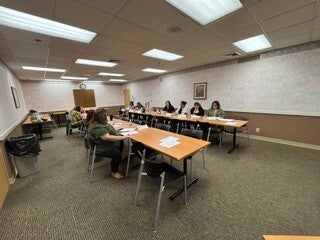
Foundational leadership
Explore core leadership principles, team dynamics, effective communication, and operational management tailored for new and aspiring nurse managers.
Advanced management strategies
Develop expertise in conflict resolution, strategic planning, performance management, and organizational development for experienced nurse managers.
Executive nursing leadership
Focus on high-level strategic thinking, retention strategies, and impactful leadership for Chief Nursing Officers and executive-level nurses.
Customized team workshops
Tailored workshops addressing specific needs and challenges of your healthcare organization's entire nurse management team.

Invest in your leadership future
Join a community of dedicated nurse leaders committed to excellence and continuous growth. Nurse Manager University is your partner in achieving your professional aspirations.
"The self-assessments helped me identify my strengths and areas for growth, leading to immediate improvements in my team's performance."
— Sarah J., Nurse Manager
"Teaming up with my colleagues on the activities helped improve our working relationships.
— Mark T., Nurse Manager
"Real world examples help solidify the content
— Emily R., Assistant Nurse Manager
Get in touch
Our location
Nurse Manager University
Danielson, Connecticut, United States
Email: cyrjames3812@gmail.com
Phone: 508-735-3830